WSOP Hand Story: Raymond Rahme, Quads, and the $3,048,025 Finish
Raymond Rahme’s run at the 2007 World Series of Poker Main Event ended in third place—and a payout of $3,048,025. It was a landmark result for the South African pro, and a useful reminder that a tournament story can become muddled when a dramatic hand-ranking term gets attached to it.
pokerhāndsIn particular, “quads” and “full house” are not interchangeable, and a player’s final placing does not tell us the odds of the hand that ended their tournament. This guide puts the raymond rahme 2007 finish in context, reviews Texas Hold’em hand rankings, and gives practical hand and draw probabilities you can use at the table. It also points to printable cheat sheets and equity charts for quick study.
Raymond Rahme at the 2007 WSOP Main Event
Rahme reached the final three of the 2007 WSOP Main Event, which drew thousands of entrants. He finished third for $3,048,025. Jerry Yang went on to win the championship, while Tuan Lam finished second. Rahme’s result remains one of the most notable Main Event finishes by a South African player.
There’s a useful distinction for anyone looking up WSOP Main Event 3rd place results: Rahme’s final placement and payout are well-established tournament facts. But those facts alone do not establish that he lost specifically with quads, or that quads were beaten by a full house. Don’t treat a headline that pairs “Rahme” and “quads” as a complete hand history unless it supplies the cards and board.
That caution matters because a poker hand is determined by the best five-card combination available to each player. A player can use both hole cards, one hole card, or—in some cases—the five community cards alone. To analyze a reported hand, you need the hole cards, the board, and the action. Without those details, assigning a hand ranking or calculating exact odds is guesswork.
Quads vs. full house: which hand wins?
Four of a kind, often called quads, beats a full house. A full house is three cards of one rank plus a pair of another rank. The rank of the four matching cards determines the winner if both players have quads; the kicker does not come into play in ordinary five-card comparisons of four of a kind because the fifth card is used only as a tiebreaker when the quads ranks match.
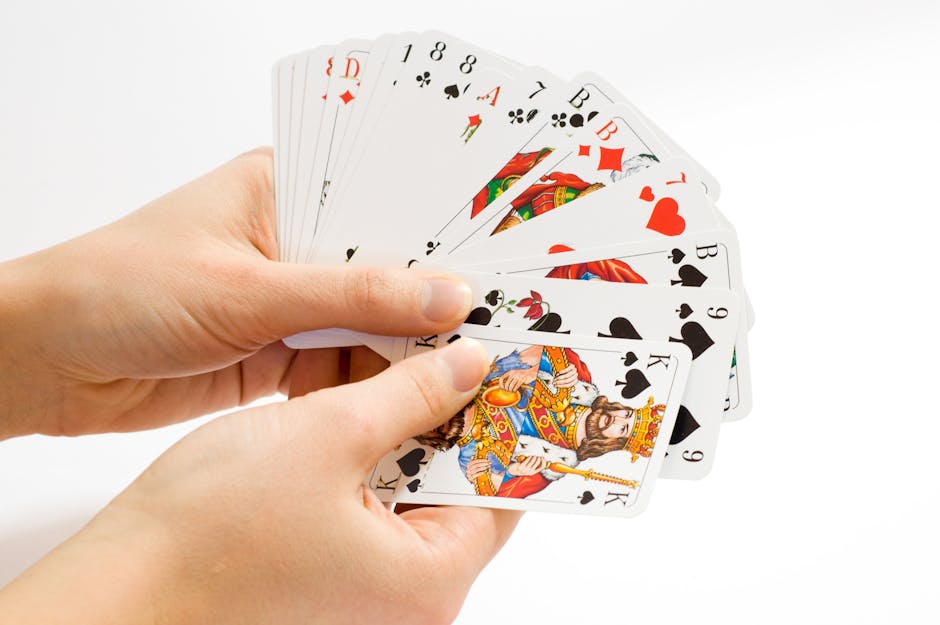
Hand Example Ranking note Four of a kind 9♠ 9♥ 9♦ 9♣ A♠ Four cards of the same rank Full house K♠ K♥ K♦ 6♣ 6♦ Three of one rank, plus a pair Flush Five hearts, not in sequence Five cards of one suit Straight 5-6-7-8-9, mixed suits allowed Five consecutive ranksFor a simple sanity check: if Villain has 9♣ 9♦ and the final board is 9♥ 9♠ K♣ K♦ 6♥, Villain has quad nines. If you have K♥ 6♣, you have a full house—kings full of sixes—and you lose. Your pair of kings does not beat four nines. Suits do not have different strength in standard Texas Hold’em; a spade is not higher than a heart.
Players also sometimes confuse a straight with a flush draw. A straight is about consecutive ranks; a flush is about matching suits. A player holding four hearts after the flop has a flush draw, not a straight draw. They could have both draws at once, but they are separate ways to improve.
Texas Hold’em hand rankings, from strongest to weakest
Knowing the full ranking is basic, but it prevents costly mistakes in home games and low-stakes online poker—especially when the board pairs or completes a draw.
- Royal flush: A-K-Q-J-10, all one suit.
- Straight flush: Five consecutive cards of one suit.
- Four of a kind: Four cards of the same rank.
- Full house: Three of a kind plus a pair.
- Flush: Five cards of one suit, not in sequence.
- Straight: Five consecutive ranks, with suits not required to match.
- Three of a kind: Three cards of the same rank.
- Two pair: Two different pairs.
- One pair: Two cards of the same rank.
- High card: None of the above; the highest card plays.
Kickers matter when players have the same made-hand category and rank. For example, if both players have a pair of aces, the remaining cards can decide the pot. If you have A♣ K♣ and Villain has A♦ Q♦ on a board of A♥ 8♠ 5♣ 2♦ 3♥, both players have a pair of aces, but your king kicker beats Villain’s queen kicker.
Hand odds and probabilities: what “four of a kind odds” means
Odds depend on the situation being measured. The chance of being dealt a particular starting hand is not the same as the chance of making a hand by the river, and both differ from the chance of winning against one opponent. Always check whether a statistic is about a five-card hand, a seven-card best hand, a specific draw, or an entire deal.
For a standard five-card poker hand, the commonly quoted probability of four of a kind is 0.0240% (1 in 4,164), also stated as about 1 in 4,165. The tiny difference is rounding. This is a five-card hand statistic—not the probability of a player being dealt quads in every possible Hold’em situation.
In Texas Hold’em, players make the best five-card hand from seven available cards: two hole cards and five community cards. The chance of ending with four of a kind is therefore different from the five-card figure. It also changes depending on what you know—for example, whether you are counting from the flop, turn, or river and whether you are asking about your hand alone or an opponent’s hand too.
Outs and draw odds by flop, turn, and river
An out is a card that improves your hand to what you believe is the best hand. Outs are not always clean: a card that completes your draw may also give an opponent a better hand. Count carefully, and consider the board and your opponent’s likely range.
Common draw after the flop Approximate outs Chance to hit by turn Chance to hit by river Four to a flush 9 19.1% 35.0% Open-ended straight draw 8 17.0% 31.5% Gutshot straight draw 4 8.5% 16.5%These are approximate chances for an unseen card to arrive, assuming the listed outs are genuinely helpful. The by-river figure accounts for two chances to hit: the turn and river. It is not the same as the chance on the river alone. If you miss the turn, the chance to hit on the river is calculated from the remaining unseen cards; for a nine-out flush draw, that is roughly 19.6% after a blank turn.
A quick mental shortcut is the “rule of four” after the flop: multiply your outs by four to estimate your chance of hitting by the river. With nine flush outs, that gives about 36%, close to the more precise 35%. After the turn, use the “rule of two”: nine outs are roughly 18% to hit on the river, close to the precise 19.6%. These shortcuts are estimates, not guarantees.
Before counting all nine flush outs, check whether some cards are dangerous. If you hold two hearts and the board has two hearts, a third heart completes your flush. But if the board pairs on that same card, an opponent may make a full house. Your draw can improve and still lose—a key point in any quads vs. full house discussion.

Use printable cheat sheets and equity charts the right way
Printable cheat sheets can help new players memorize hand rankings, common draw counts, and approximate turn-and-river odds. Keep one beside a home-game table or use it during review. A good sheet should distinguish made hands from draws, identify the number of outs, and label whether probabilities apply from flop to turn, turn to river, or flop to river.
Equity charts answer a different question: how often a hand is expected to win or tie against another hand or a range, assuming the remaining cards are dealt. Equity is not the same as the chance of hitting a draw. A flush draw may have a 35% chance to complete by the river, yet its total equity can be higher or lower depending on whether it already has a pair, whether an opponent can redraw, and whether the draw’s cards are clean.
- Use hand-ranking charts to compare completed hands.
- Use draw-odds tables to estimate the chance of improving.
- Use equity charts or a calculator to compare your full hand against an opponent’s range.
- Recalculate when the turn changes the board or creates new outs for either player.
What the Rahme result teaches tournament players
Rahme’s third-place finish is an achievement worth remembering on its own. It also offers a broader lesson: tournament outcomes, hand rankings, and probabilities are related, but they are not the same thing. A payout tells you where a player finished. A hand history tells you what cards were shown. A probability needs a clearly defined situation.
When you review a dramatic hand, start with the board and hole cards, then identify each player’s best five-card hand. Check the kicker whenever players share a pair or another hand category. If there is a draw, count the outs and ask whether they are clean. And if a recap says “quads versus full house,” verify the cards: quads beat a full house, regardless of suits.
That careful approach is more useful than memorizing a headline. It helps you read a WSOP hand accurately, make fewer ranking errors in your own games, and understand what an odds figure actually describes.